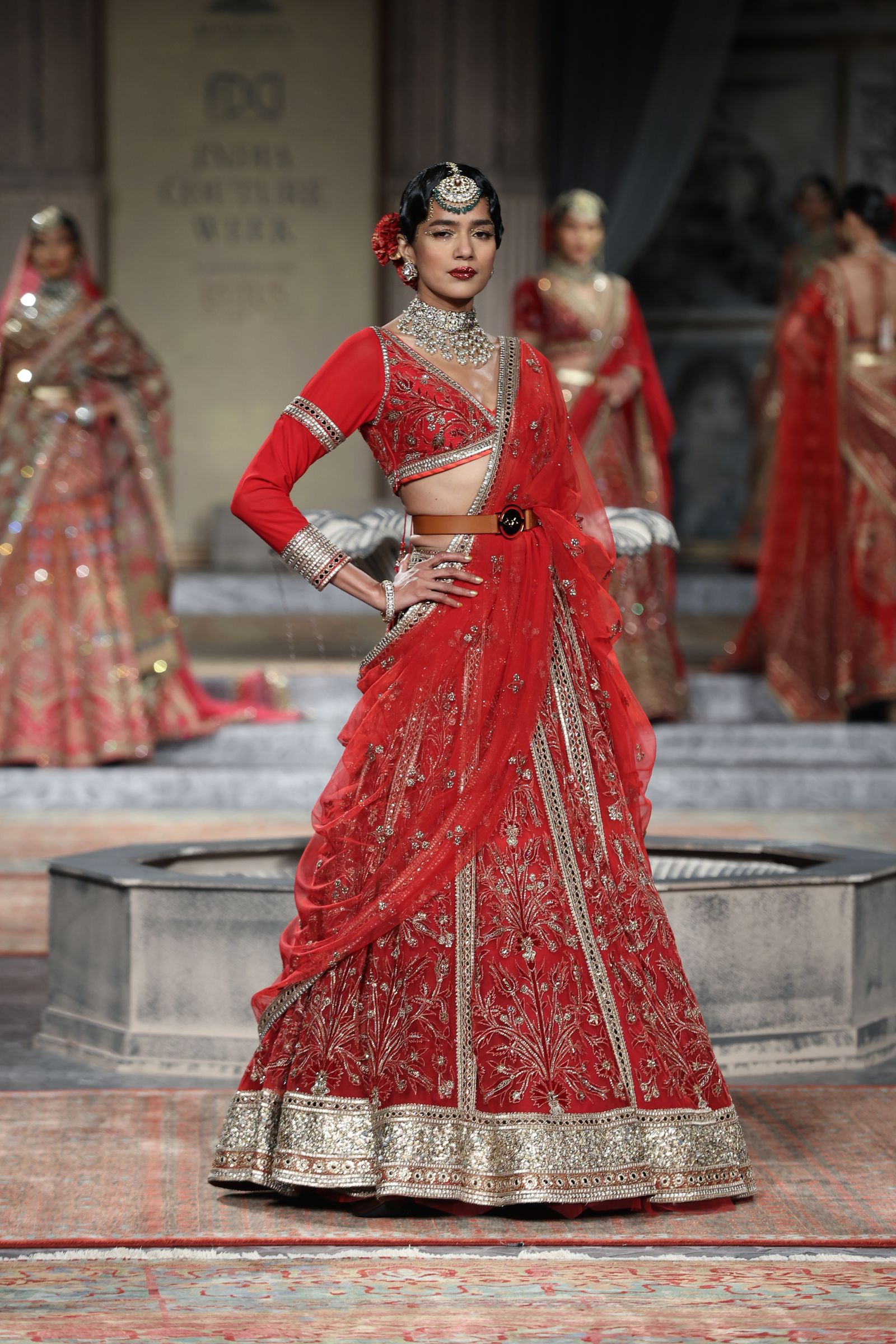
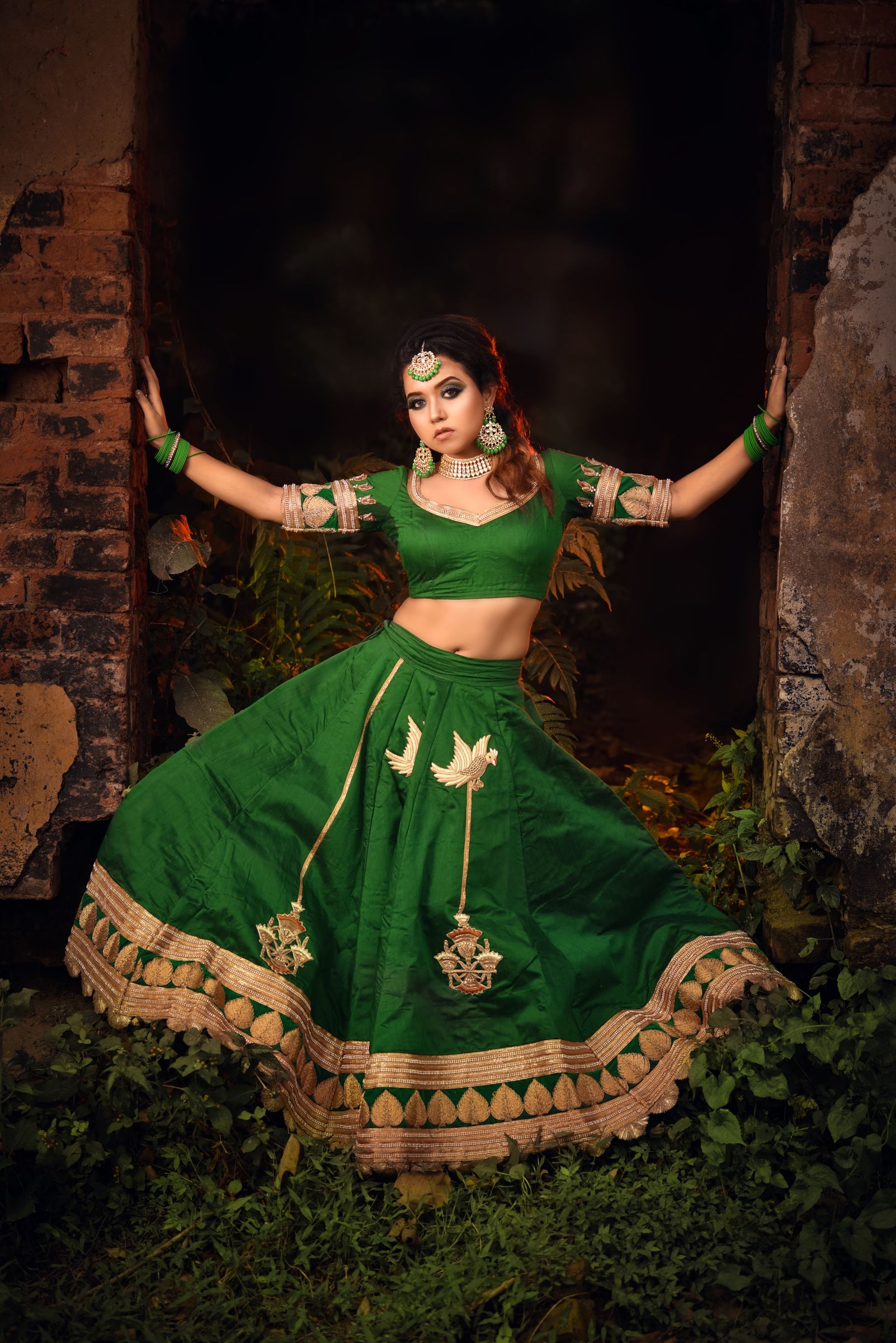
Before the machine, before the algorithm, there was the karchoub — a wooden frame stretched with silk, and around it, six karigars with needles in their teeth and metallic thread in their fingers.
The first stitch
Dabka is a couching technique. A metallic spring-thread is laid on the fabric and stitched down with silk. Done well, it catches candlelight like old jewellery.
“You do not embroider a lehenga. You embroider a memory.” — Ustad Nazir
Every Dabkazari piece begins here — a design paper pinned to the karchoub, and a hush that only comes when six people are concentrating together.